

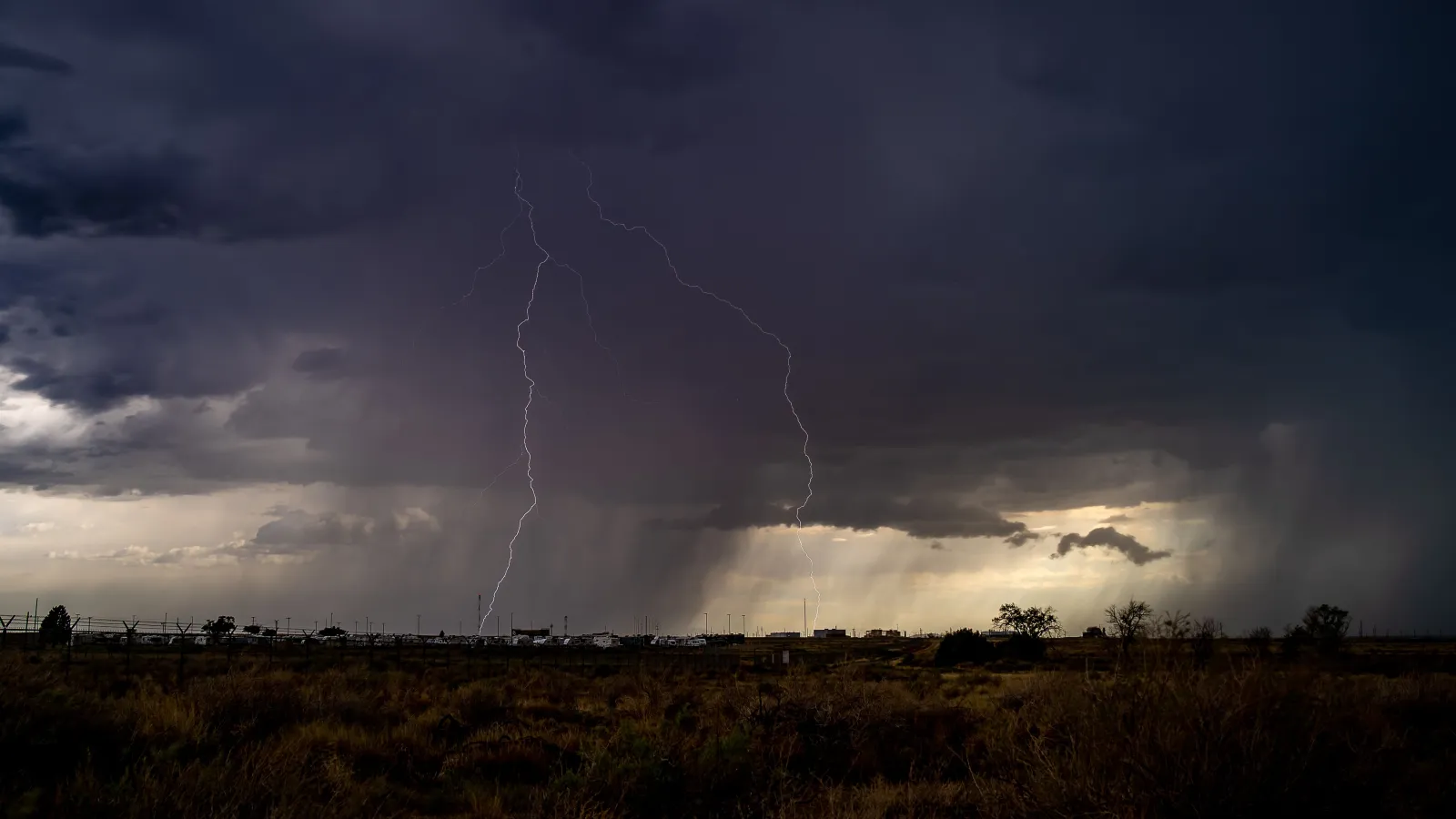
New Mexico monsoon storms come through fast, but even a short storm still tests a roof. Heavy rain, and high winds find the weak spots that months of dry weather can hide.
Not all storm damage results in an immediate visible leak. Often the first sign shows up weeks later as a ceiling stain, wet insulation, or rotting around vents. But if you know what to look for you can catch it early to reduce damage.
Start With Safety: Stay Off the Roof
We can’t recommend getting up there right after a storm. Wet shingles are slick, heavy rain and wind can leave soft spots you won’t see until you’re standing on one.
Everything below can be checked from the ground, through a window, or from inside your house.
Check From the Ground
From a safe distance, scan for shingles that are missing, lifted, curled or sitting at an odd angle. If you have a flat / low slope roof, look for blisters, loose material or standing water. Check around the yard for shingle pieces, chunks of flashing or torn membrane on the ground
Sagging, damaged, or clogged gutters and downspouts back water up under the roof edge. That’s one of the most common ways monsoon rain gets into a house with no other problem.
Piles of what looks like coarse black sand are shingle granules washing off. A little is normal. A noticeable pile means the shingle surface is wearing through.
Inspect vents, skylights, pipes and swamp coolers.The flashing around anything that sticks through the roof is where most leaks actually start. A crooked or missing vent cap is an open hole.
Check Inside
Check ceilings and upper walls for new yellowish brown stains, bubbling paint, or soft drywall. Try pressing on the stain gently, if it gives then water is still getting in. In the attic, look for damp insulation, dark staining on the roof deck, or daylight coming through. Do it during the day with the lights off.
Water travels along framing before it surfaces, so a ceiling stain rarely sits directly under the leak.
Flat and Low Slope Roofs
Flat and low slope roofs are everywhere in Albuquerque, and drainage is what matters after a storm.
Watch for water still standing a couple of days after the rain stops, clogged drains or scuppers, lifted membrane seams, blisters, and damaged flashing. Ponding water adds weight, breaks down the membrane, and finds seams that would otherwise hold.
Should I Call a Professional?
First and foremost, decide if you’ll be involving insurance. Photograph the damage and note the storm date before any permanent repairs.
Call if you find an active leak, wet insulation, soft ceiling, missing shingles, displaced flashing, or water that won’t drain. Or call if you haven’t gotten an inspection or maintenance on your roof in over a year. Roof work is part of regular property maintenance. Professionals can spot small damage you may not, and small holes can get expensive once the next storm pushes water through them.
Choose a Roofer Who Will Be Here After the Storm
There are numerous roofing companies in New Mexico that have come and gone through the years. A less established company could be gone before your roof needs its first warranty call.
Before you sign: ask how long the company has worked in New Mexico, confirm it’s licensed and insured, ask who handles warranty calls and where they’re based, and don’t sign anything that assigns your insurance claim to the contractor. Anyone reputable will let you take a day to think it over.
EverGuard Roofing & Solar has roofed New Mexico homes and businesses since 2001. If a storm has you concerned, call us at (505) 821-9543.